From the subtropical jungle of the north to the glacial silence of the far south, Argentina packs almost every kind of terrain on the planet into one country. That range is the draw. It's also the trap. This is the eighth-largest country in the world and the second-largest in South America, spanning more than 2.7 million square kilometers, and its distances are far bigger than most first-time visitors expect.
The best places to visit in Argentina sit thousands of miles apart. You can't see them all in one trip, and trying to will leave you exhausted at airport gates instead of standing in front of a glacier. So this guide does two things. It walks you through Argentina's finest destinations, the ones worth building a trip around, and it shows you how to choose between them based on your time, your interests, and the season. Pick two or three, go deep, and let the rest wait for the next visit.
This guide comes out of planning Argentina trips — where the flights actually connect, which regions are worth a slow week, which earn two days. So the advice leans practical over dreamy. These same trips are what nonprofits turn into auction packages to fund their work — so this guide is for the traveler and the fundraiser both. Here's where to start.
How to Decide Where to Go in Argentina
Deciding what part of Argentina to visit is the first real choice, and it's the one that shapes everything else. Argentina isn't a single destination so much as a dozen, its regions radically different from one another, and the smartest itineraries group two or three of them by interest rather than trying to cover the map.
To help you plan, think in profiles. If you want cities, food, and culture, base yourself in Buenos Aires and add a day trip to a Pampas estancia. If you want mountains and long day hikes, look south to El Calafate, El Chaltén, and Bariloche, where the trekking rivals anywhere on earth. Wine lovers head to Mendoza or the high-altitude vineyards around Salta. Wildlife seekers point toward Península Valdés. And if the far edge of the map calls you, Ushuaia is the jumping-off point for the Beagle Channel and Antarctica.
Interests also decide how active your days feel. A trekking-first trip built around El Chaltén will have you on a trail most mornings, while a wine-and-city trip through Buenos Aires and Mendoza runs at a gentler pace. Neither is better. What matters is matching the itinerary to how you actually like to travel, because a hiker bored in a wine cellar and a wine lover halfway up a mountain are both having the wrong trip.
The other rule is buffer time. Patagonian weather turns fast, flights get juggled, and the country's distances punish tight connections. Build a spare day into any southern leg. A curated trip absorbs that friction for you, but even a self-planned one runs smoother when you stop treating Argentina like a country you can sprint across.
One more honest note: domestic flying is not optional here. The regions are too far apart for buses to bridge on a short trip, so you'll fly between your hubs and settle in once you land.
A few pairings tend to work beautifully. Buenos Aires and Iguazú give you culture plus a natural showstopper in under a week. Buenos Aires with El Calafate and El Chaltén delivers city sophistication followed by glaciers and trekking. Buenos Aires and Mendoza is the classic food-and-wine escape. Add a third region only if you have the days to enjoy it, since each new hub means another flight and another hotel. When in doubt, cut a region rather than shortchange the ones you keep.
Is 7 days in Argentina enough?
Seven days is enough for Buenos Aires plus one other region, not the whole country. Pair the capital with Iguazú for a city-and-jungle contrast, or with El Calafate and the Perito Moreno Glacier for city-and-ice. Argentina's distances are vast, so one week favors focus over rushing. Two weeks lets you add Patagonian trekking or Mendoza wine country.
How long do you need for the highlights?
For a proper run at Argentina's highlights, plan on 10 to 14 days. Ten days comfortably covers three hubs, say Buenos Aires, the Perito Moreno Glacier, and Iguazú, with real time in each rather than a blur of transfers. Fourteen days opens up the breathing room to add El Chaltén's trekking, the wine valleys of Mendoza, or the colors of the northwest if you want to visit more of the country.
Here's a simple way to match trip length to regional coverage:
| Trip length | Sensible regional coverage |
|---|---|
| 7 days | Buenos Aires + 1 core region (Iguazú Falls or El Calafate) |
| 10 days | Buenos Aires + 2 regions (for example, Iguazú and Patagonia) |
| 14 days | Buenos Aires + 3 regions (Iguazú, Patagonia, and Mendoza or Salta) |
The Best Places to Visit in Argentina: 8 Core Destinations
These are the destinations that anchor almost every great Argentina itinerary, and together with the two bonus stops that follow, they make up our top 10 places to visit in Argentina. For each one you'll find why it's worth the trip, who it suits, when to go, and how to reach it. Read them as a menu of places to visit, not a checklist. The goal is to find the handful that fit the trip you actually want to take.
Buenos Aires
Buenos Aires is where nearly every Argentina trip begins. As the capital of Argentina, it's the country's cultural and culinary heart, often called the "Paris of South America" for its grand boulevards and Beaux-Arts architecture, and it's the gateway you'll almost certainly fly into before heading anywhere else. Give it two or three days at minimum.
- Best for
- Culture, gastronomy, tango, and easy first-trip footing. This is the softest landing in the country.
- When to go
- Year-round. Spring (September to November) and autumn (March to May) are the most pleasant, since January and February bring real heat and humidity.
- Getting there
- Two airports serve the city. Ministro Pistarini (EZE) handles most long-haul international arrivals, and Aeroparque Jorge Newbery (AEP) is the central domestic hub that connects you onward to Patagonia, Iguazú, and the rest.
Why visit: The city opens up neighborhood by neighborhood. Recoleta sets the tone of quiet elegance, home to leafy avenues, embassies, and the extraordinary Recoleta Cemetery, where the country's elite rest in elaborate mausoleums. Palermo is greener and more design-forward, packed with the city's best restaurants and cocktail bars. La Boca brings the brightly painted houses everyone photographs, and San Telmo brings cobblestones and antique markets.
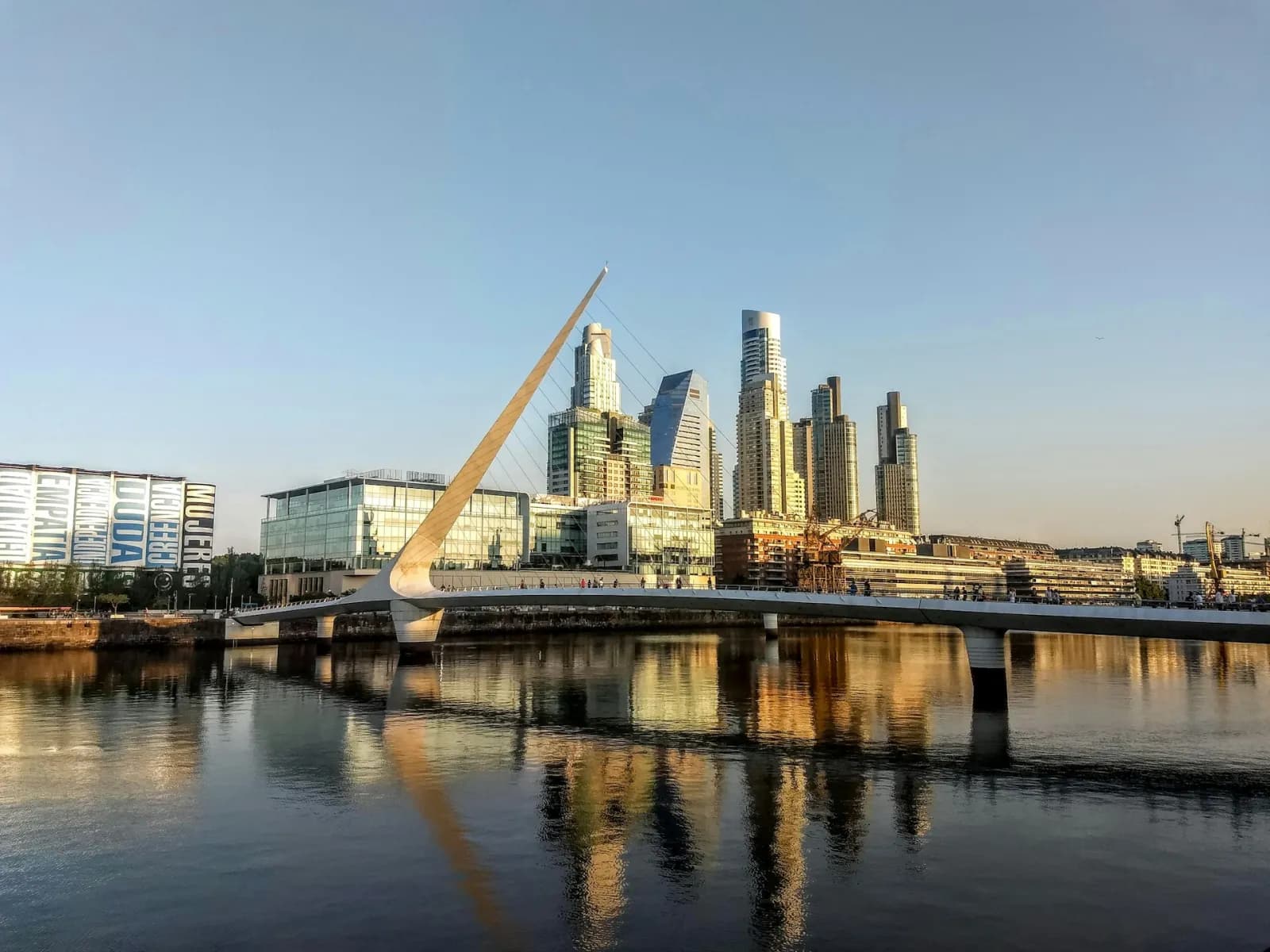
A word of honesty on La Boca: it's a must-see by day for its color and its football history, but it thins out and gets sketchier after dark, so treat it as a daytime stop.
When visiting Buenos Aires, come hungry. The city runs on beef, and a proper parrilla (steakhouse) is a rite of passage, ideally paired with a Malbec you'll want to chase all the way to Mendoza later in the trip. But the city has quietly become one of the continent's most exciting dining destinations, with tasting menus in Palermo, historic cafés like the century-old Café Tortoni, and a late-night rhythm that only really warms up after 9 p.m. Adjust your clock and lean in.
Tango is the city's most famous export, and a dinner show in an intimate, historic venue is close to essential for a first visit. Just beyond the city, a day trip to a working estancia out on the open pampa puts you on horseback and in front of a proper Argentine asado, the country's ritual barbecue. It's the fastest way to feel the gaucho tradition that shaped the nation.
For where to stay, our boutique Buenos Aires stay keeps you in Recoleta, walking distance from the best of the city.
Iguazú Falls
Iguazú Falls is Argentina's most jaw-dropping natural wonder, and photos genuinely undersell it. The system spans roughly 2.7 kilometers (1.7 miles) along the Iguazú River, splintering into around 275 separate cascades that shift slightly with the season's rainfall. The surrounding national park protects a rich tract of subtropical rainforest and was inscribed as a UNESCO World Heritage Site in 1984.
- Best for
- Travelers who want a natural spectacle without a strenuous hike, and a vivid contrast to city days in Buenos Aires.
- When to go
- The shoulder seasons (March to May and September to November) balance strong water levels with comfortable heat and humidity.
- Getting there
- Fly into Puerto Iguazu, the gateway town on the Argentine side. It's about a two-hour flight from Buenos Aires.
Why visit: The centerpiece is the Garganta del Diablo, the Devil's Throat, a U-shaped chasm where the river converges and plunges 80 to 82 meters (262 to 269 feet) with a roar you feel in your chest. Mist columns rise straight into the canopy. It's raw scale, and it's the kind of sight that reorders your idea of what water can do. You can see the main viewpoints on a flat, easy hike suitable for any fitness level.
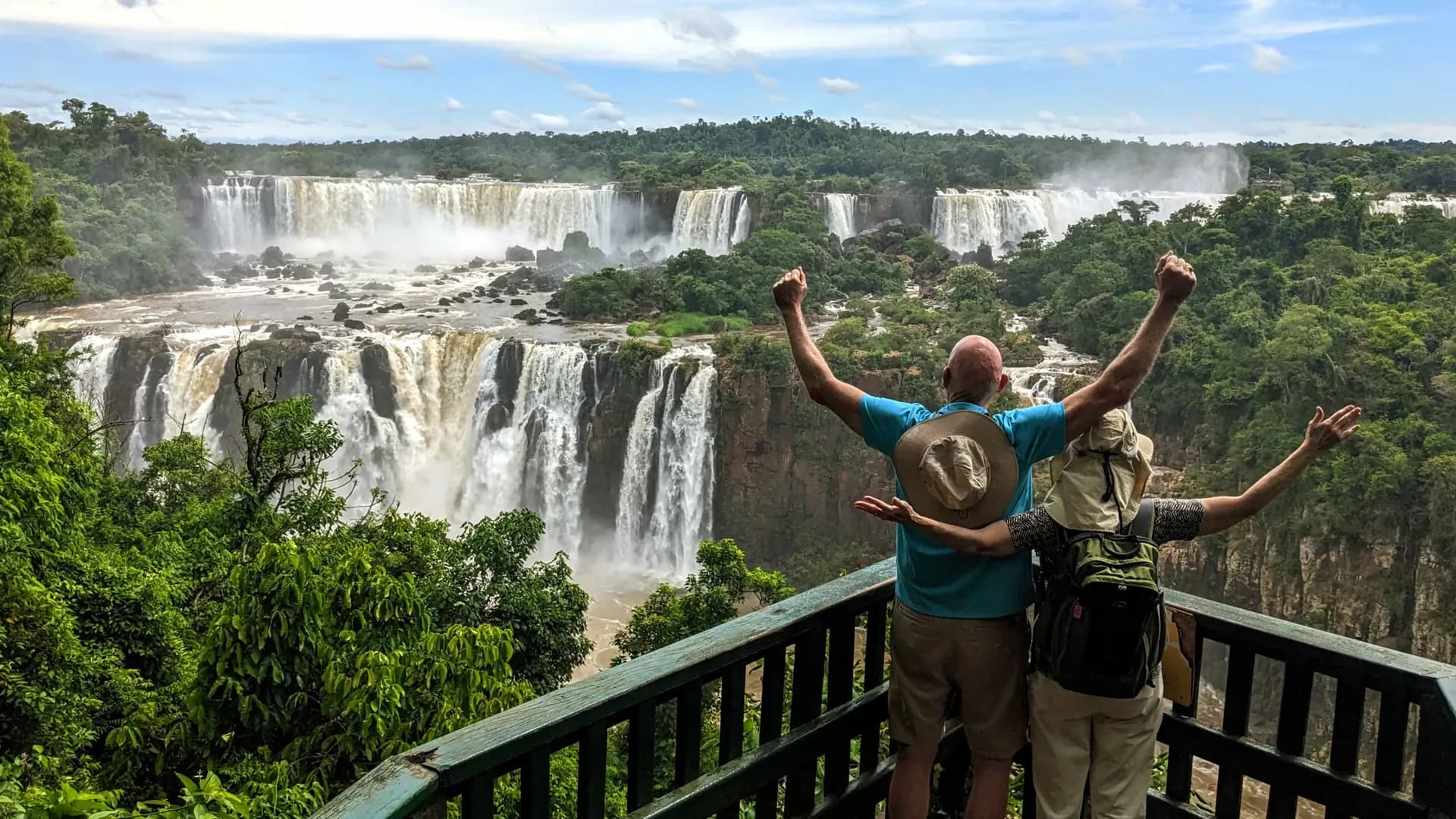
The falls straddle the border between Argentina's Misiones province and Brazil, and the two sides of the falls complement each other. The Argentine side gives you the immersive, kinetic experience, with steel boardwalks that carry you through the jungle and out over the water, close enough to get soaked. The Brazilian side offers the wide, panoramic view that captures the full 2.7-kilometer front, and it's the only side from which scenic helicopter flights over the falls depart.
Give the Argentine side the better part of a day. Beyond the Devil's Throat, you walk along easy boardwalks and short jungle hiking trails that link the upper and lower circuits, and the surrounding rainforest is alive with toucans, coatis, and hundreds of butterfly species. For the fully drenched version, a fast boat ride runs you straight under the cascades. Two nights in the area lets you do both sides without rushing, and it's the setup we plan most often.
If you'd rather have the flights, transfers, and both-sides logistics handled, our Iguazú Falls package pairs the jungle with the city.
The same subtropical northeast pays off for anglers too. South of the falls, in Corrientes province, the vast Iberá wetlands and the Paraná river system are world-famous golden dorado water, a hard-fighting river fish that pulls fly fishers from all over. Our golden dorado fly fishing experience sets you up in that wetland country with a high-touch lodge.
El Calafate & the Perito Moreno Glacier
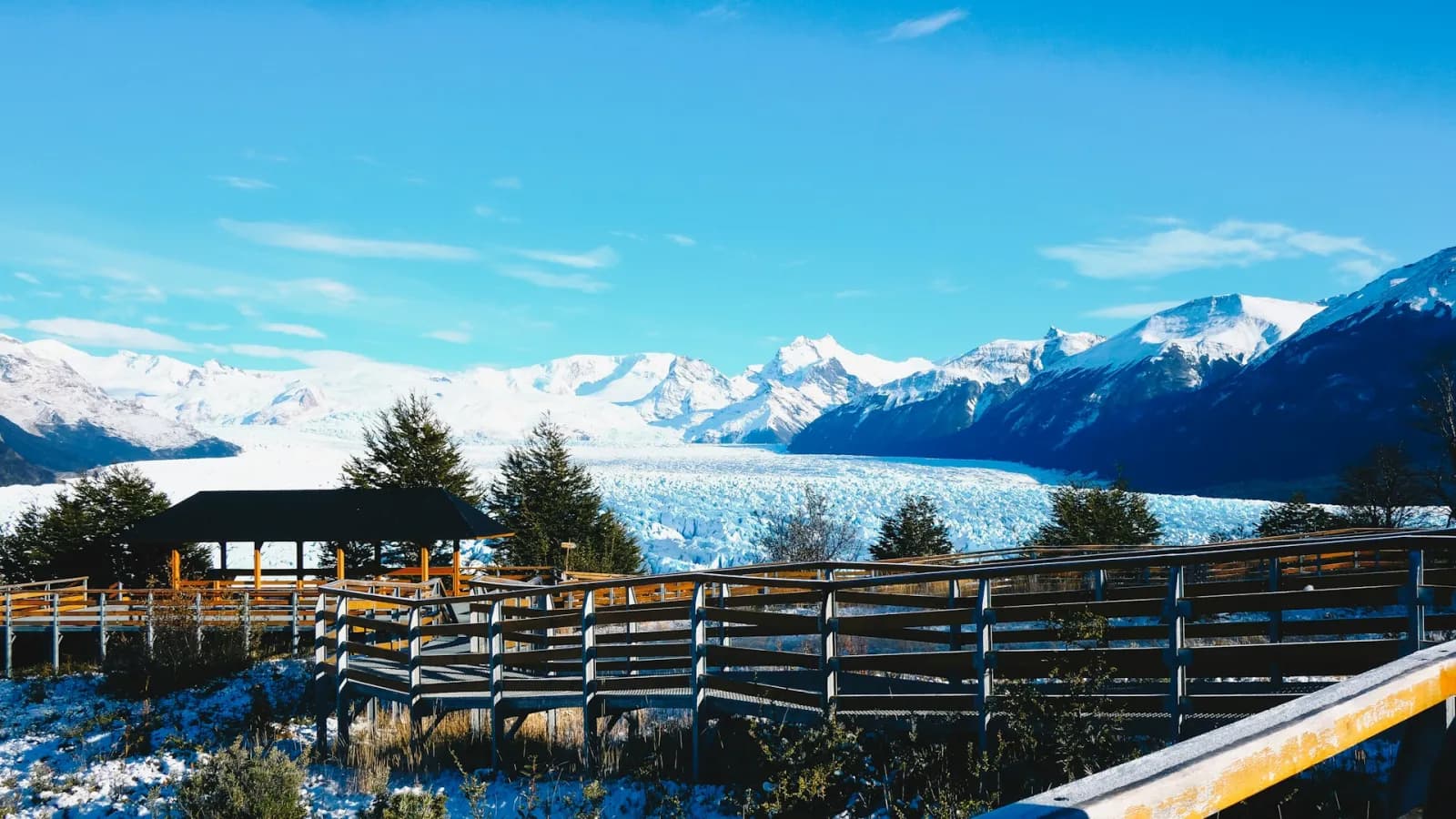
Deep in the southern province of Santa Cruz, the town of El Calafate is the staging ground for one of Patagonia's defining sights: the Perito Moreno Glacier. The glacier descends from the Southern Patagonian Ice Field straight into the milky water of Lago Argentino, inside Los Glaciares National Park, a UNESCO World Heritage Site inscribed in 1981.
- Best for
- First-time Patagonia visitors who want a huge payoff without a demanding trek.
- When to go
- The austral summer, December through March, brings the warmest and most reliable weather.
- Getting there
- Visit El Calafate first: fly in from Buenos Aires, then use the town as your base. It's also the gateway to El Chaltén, reached by a scenic three-hour bus ride across the open Patagonian steppe. Note that ride-hailing apps don't operate here, so transfers matter.
Why visit: The Perito Moreno Glacier is one of the great glacier experiences on Earth, and it comes with drama. For decades it held steady while glaciers elsewhere shrank, but that classic stable-and-advancing narrative ended around 2018 and 2019. Scientific data shows the glacier has been losing significant mass and retreating since then, a decline that has been accelerating from 2019 through 2025. It's a rare chance to stand before a wild place that's actively shifting.
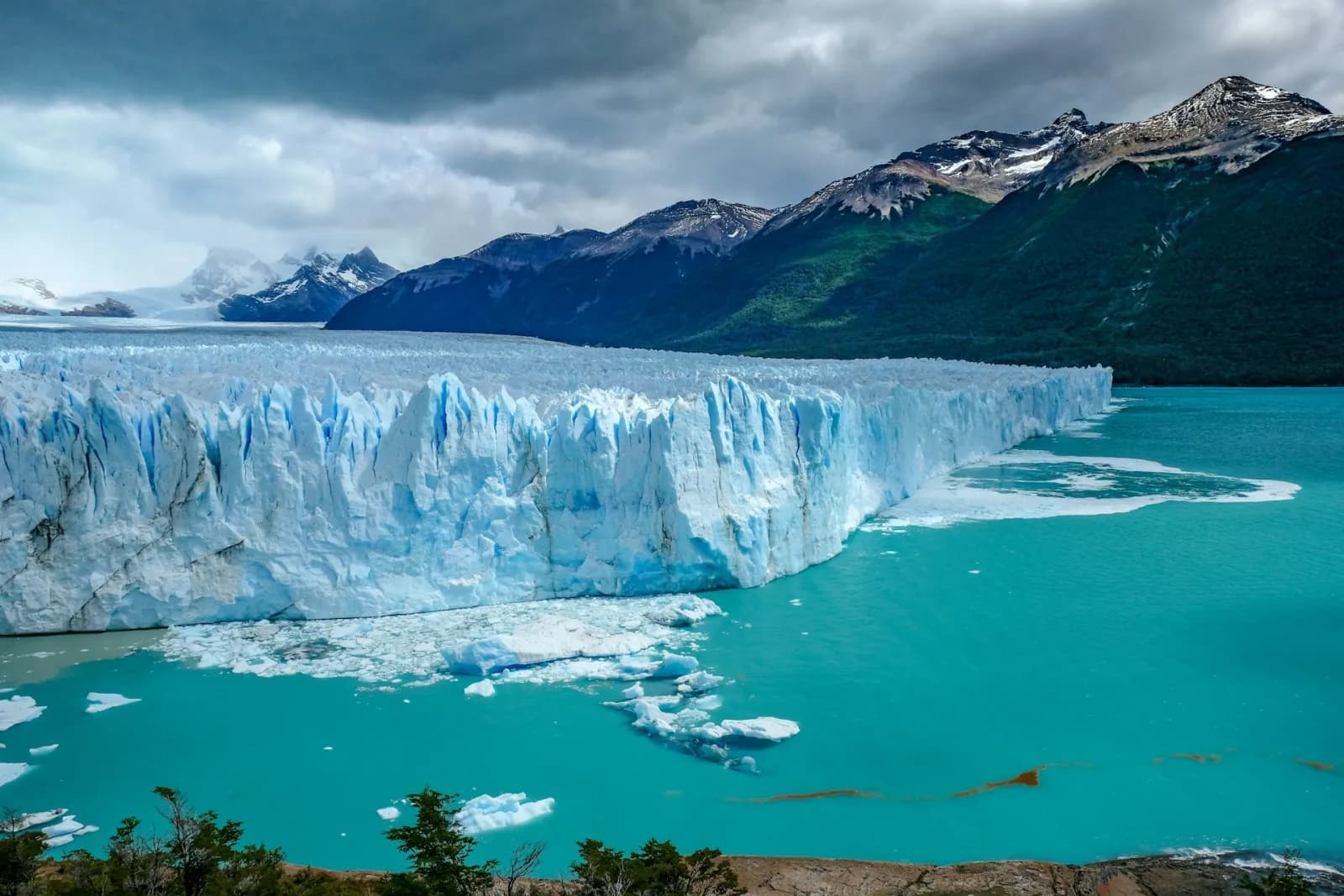
The calving spectacle is the draw. House-sized chunks of ice shear off the glacier's roughly 70-meter face and crash into the lake with a sound like thunder. You watch it from a well-built network of steel boardwalks, or you go closer on a guided "minitrekking" excursion, strapping on crampons to walk directly on the crevassed ice.
Beyond the main boardwalks, the region deserves a little more time. A boat trip carries you across Lago Argentino to the face of other glaciers like Upsala and Spegazzini, and the nearby Laguna Nimez reserve is an easy flat walk for flamingos and birdlife. El Calafate itself is a comfortable, walkable town with good restaurants, which makes it a pleasant base to settle into rather than just a launchpad.
El Chaltén & Mount Fitz Roy
Three hours north of El Calafate sits El Chaltén, a small, wind-battered frontier town that Argentina officially calls its national trekking capital. The jagged granite spires of the Fitz Roy massif dominate the skyline, and they pull hikers and climbers from all over the world.
- Best for
- Active travelers who want serious day hikes without a multi-day expedition.
- When to go
- Austral summer, December to March, for stable trekking conditions.
Why visit: The genius of El Chaltén is logistics. The trailheads start right from the edge of town, so you don't need a car or a daily transfer to reach the best trails in Patagonia. You lace up at your lodge and walk straight into the mountains. Fitz Roy itself, at 3,405 meters (11,171 feet), is the peak stamped on the logo of the outdoor brand that borrowed Patagonia's name.
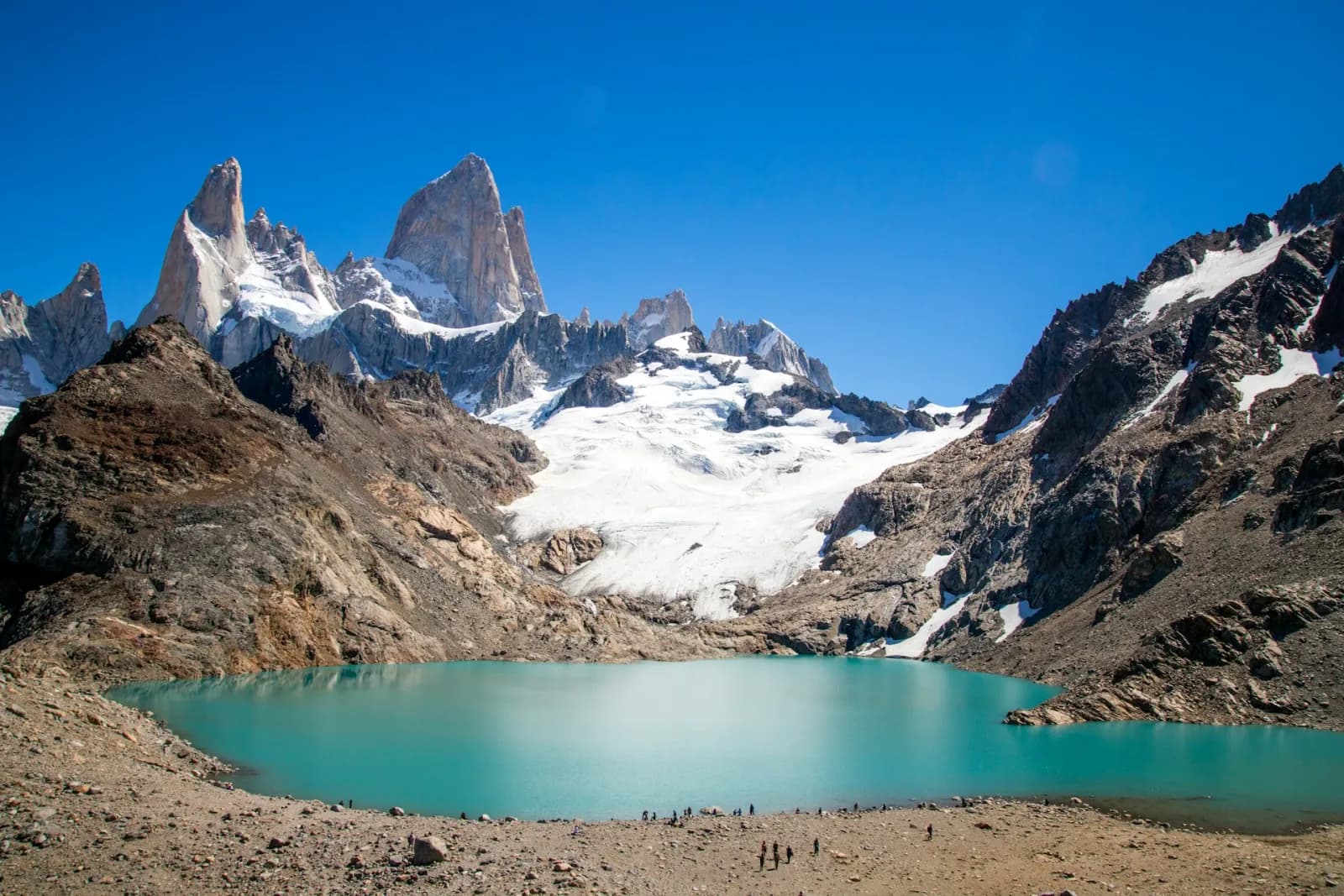
Two routes define the town. The Laguna Torre hike is a moderate 18-kilometer round trip through lenga forest and along glacial rivers, ending at a lake beneath the needle of Cerro Torre. The Laguna de los Tres hike is the marquee one, roughly 21 to 22 kilometers round trip, and it delivers the best views of Fitz Roy in the whole range. It's also demanding: the final kilometer climbs about 400 vertical meters over loose rock and asks for real fitness, repaid at the top with spectacular views of the granite towers. You can find park and trail detail through Argentina's national park information.
If those two feel like too much, the town has gentler legs too. Shorter trails lead to viewpoints like Mirador de los Cóndores, a soft walk from the edge of town, or Chorrillo del Salto, a quiet waterfall reached on a flat forest path. That range is the real gift: a hike in El Chaltén can be a brutal all-day push or a relaxed stroll, all without a car. Pace the trekking so your legs last the whole trip, and don't try to knock out both marquee routes on back-to-back days.
The rivers that thread this part of Patagonia are also some of the finest trout water anywhere, which is why premium anglers make the trip. If a fly rod belongs on your itinerary, our Patagonian trout rivers experience pairs wild water with a comfortable lodge.
Bariloche & the Lake District
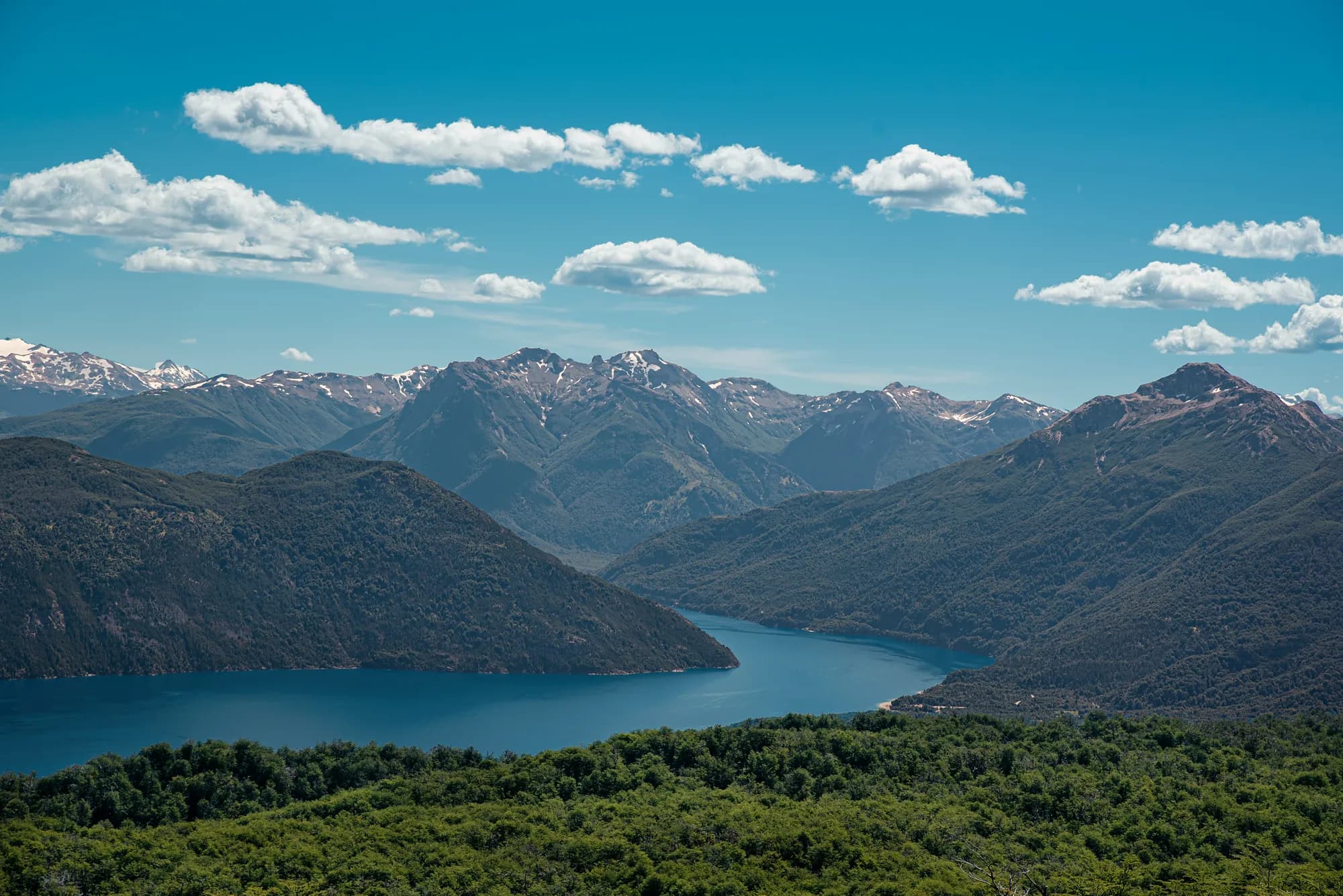
San Carlos de Bariloche is the hub of the northern Patagonian Lake District, tucked inside Nahuel Huapi National Park. It's a softer, greener Patagonia than the glacial south, defined by deep blue lakes, dense alpine forest, and snow-capped peaks that early European settlers found reminiscent of the Alps.
- Best for
- Travelers who want mountain scenery without hard trekking, and anyone chasing a year-round destination. In the austral winter, nearby Cerro Catedral becomes one of the continent's premier ski resorts.
- When to go
- December to March for the lakes and hiking, July and August for skiing.
- Getting there
- Direct domestic flights connect Buenos Aires to Bariloche.
Why visit: This is Patagonia's gentle side, and it's beautiful in a completely different key. That Alpine feel is no accident: Bariloche was settled largely by Swiss, German, and northern Italian immigrants, and their heritage is why the town trades in artisanal chocolate, timber-and-stone architecture, and cured meats. The surrounding Ruta de los Siete Lagos (Route of the Seven Lakes) is one of the great scenic drives on the continent, linking a string of mirror-still lakes through pristine valleys.
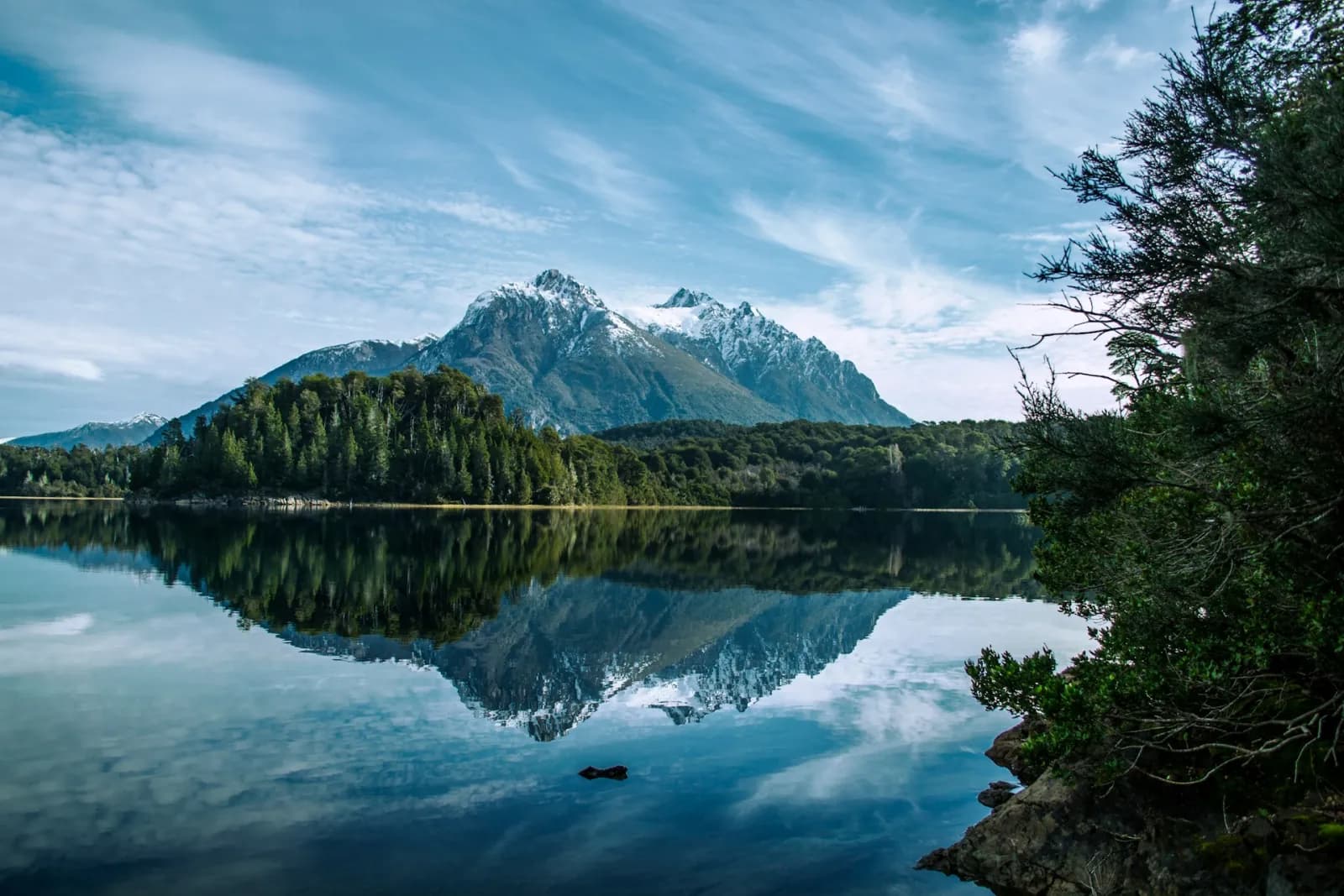
That said, hikers aren't left out. The lakes in the area are ringed by day hikes for every level, from the classic climb to Refugio Frey beneath its granite spires to a soft forest walk along the lakeshore. It's a gentler style of trekking than El Chaltén's, with a hot chocolate waiting at the end. Kayaking, a boat trip across the water, or a lazy drive through the seven lakes rounds out days that never feel rushed.
The region pairs naturally with the capital, which is why our Patagonia & Bariloche escape builds the two into a single, softer-luxury trip.
Mendoza Wine Country
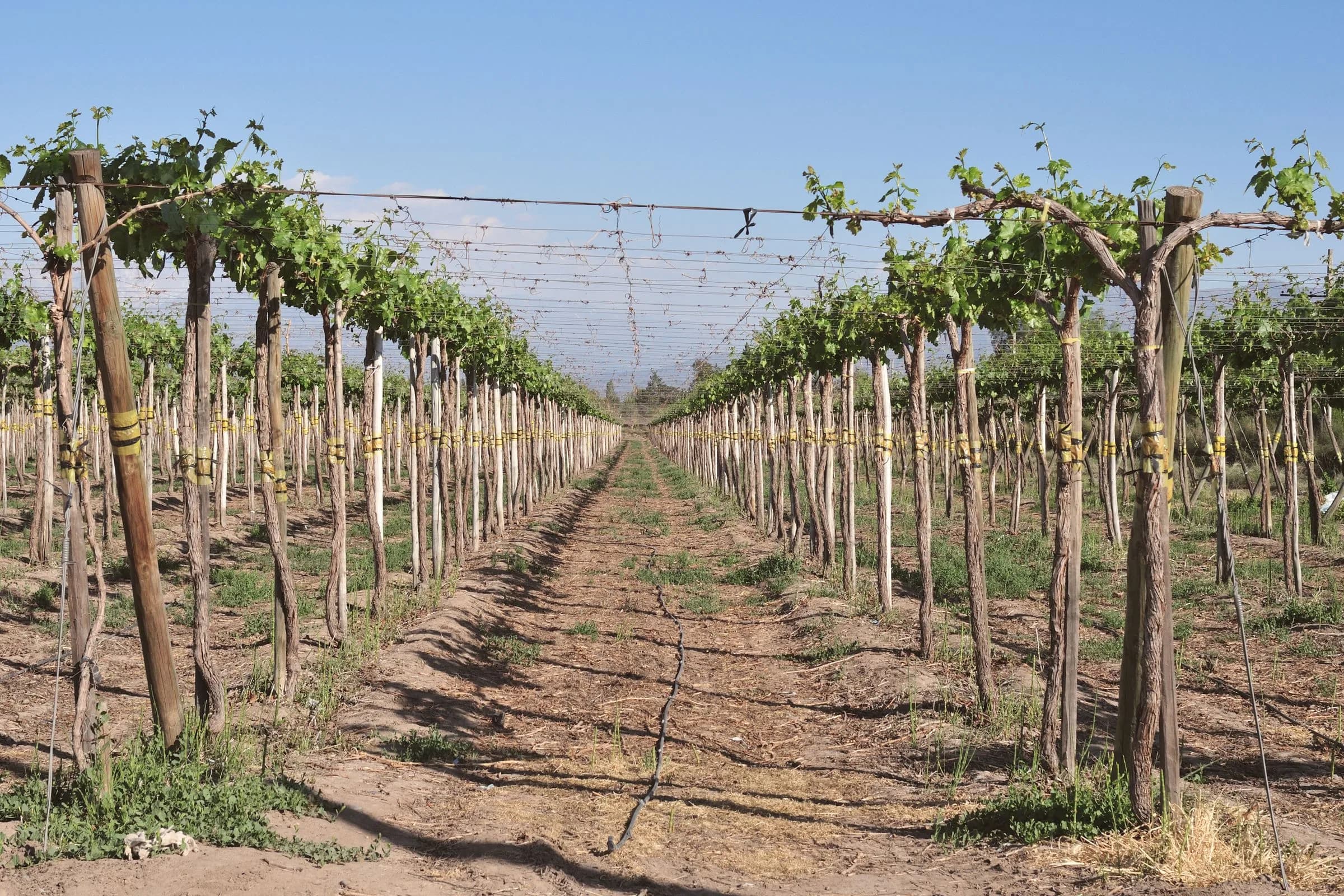
Set on a high plateau at the foot of the Andes, Mendoza is the capital of Argentine wine and the home of its most celebrated grape. Malbec thrives here in high-altitude vineyards that soak up intense sun and drink pure Andean snowmelt, and the mountains give every tasting a cinematic backdrop.
- Best for
- Wine lovers, food-focused travelers, and anyone who wants their days paced by long lunches rather than early alarms.
- When to go
- Spring (October to December) and the autumn harvest (February to April) are the sweet spots.
Why visit: It's serious wine with a view, and one of the best things to do in Argentina for anyone who travels by the glass. It helps to know the sub-regions before you go. Maipú, closest to the city, is the historic heartland with old-vine wineries and easy day trips. Luján de Cuyo is the classic address for structured, age-worthy Malbec. And the Uco Valley, higher and cooler, draws travelers after boundary-pushing wineries with dramatic architecture and the freshest mountain fruit. Just west rises Aconcagua, at 6,961 meters (22,838 feet) the highest peak in the Americas and in both the Western and Southern Hemispheres.
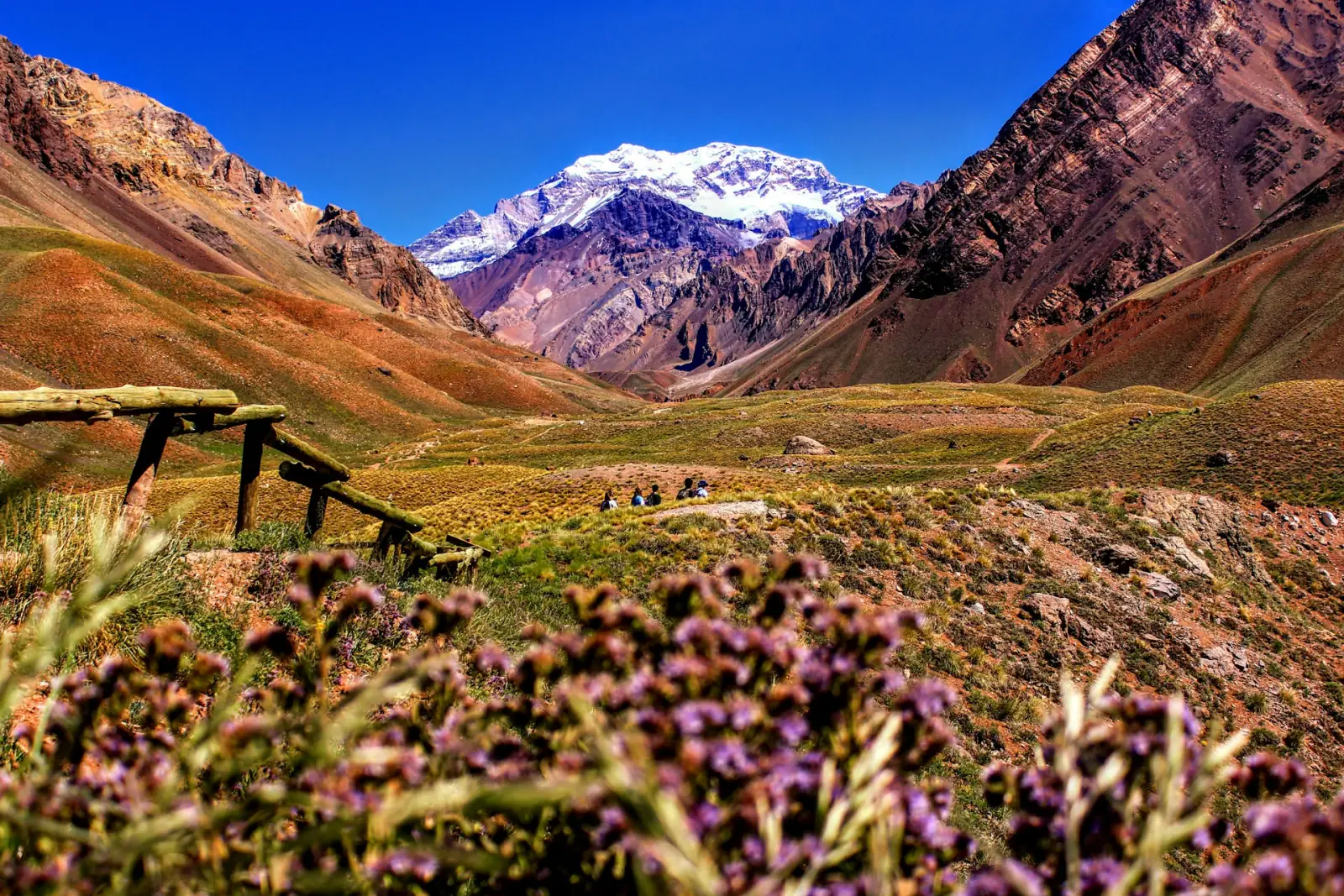
Mendoza deserves more depth than a destination overview can give, so we've written a dedicated guide to wine tasting tours in Mendoza if you want the winery-by-winery detail. For a trip built around the region, our Mendoza wine country package handles the lodging and the vineyard access.
Salta & the Northwest
Northern Argentina is the country at its most surprising, a world away from the European capital and the glacial south. Here the country turns to high desert, Andean culture runs deep, and colonial architecture fills the towns. The city of Salta, known fondly as Salta la Linda (Salta the beautiful), is the perfect base for exploring the region.
- Best for
- Culture-first travelers, photographers, and anyone who wants a striking counterpoint to the ice and the cities.
- When to go
- The dry season, roughly May to September, is most comfortable and avoids the summer heat.
Why visit: The scenery is unlike anywhere else in the country. The Quebrada de Humahuaca is a spectacular multicolored mountain valley that once served as an Inca caravan route, and it was inscribed as a UNESCO World Heritage Site in 2003. Nearby Purmamarca sits beneath the Cerro de los Siete Colores, the Hill of Seven Colors, its rock banded with mineral pigments.
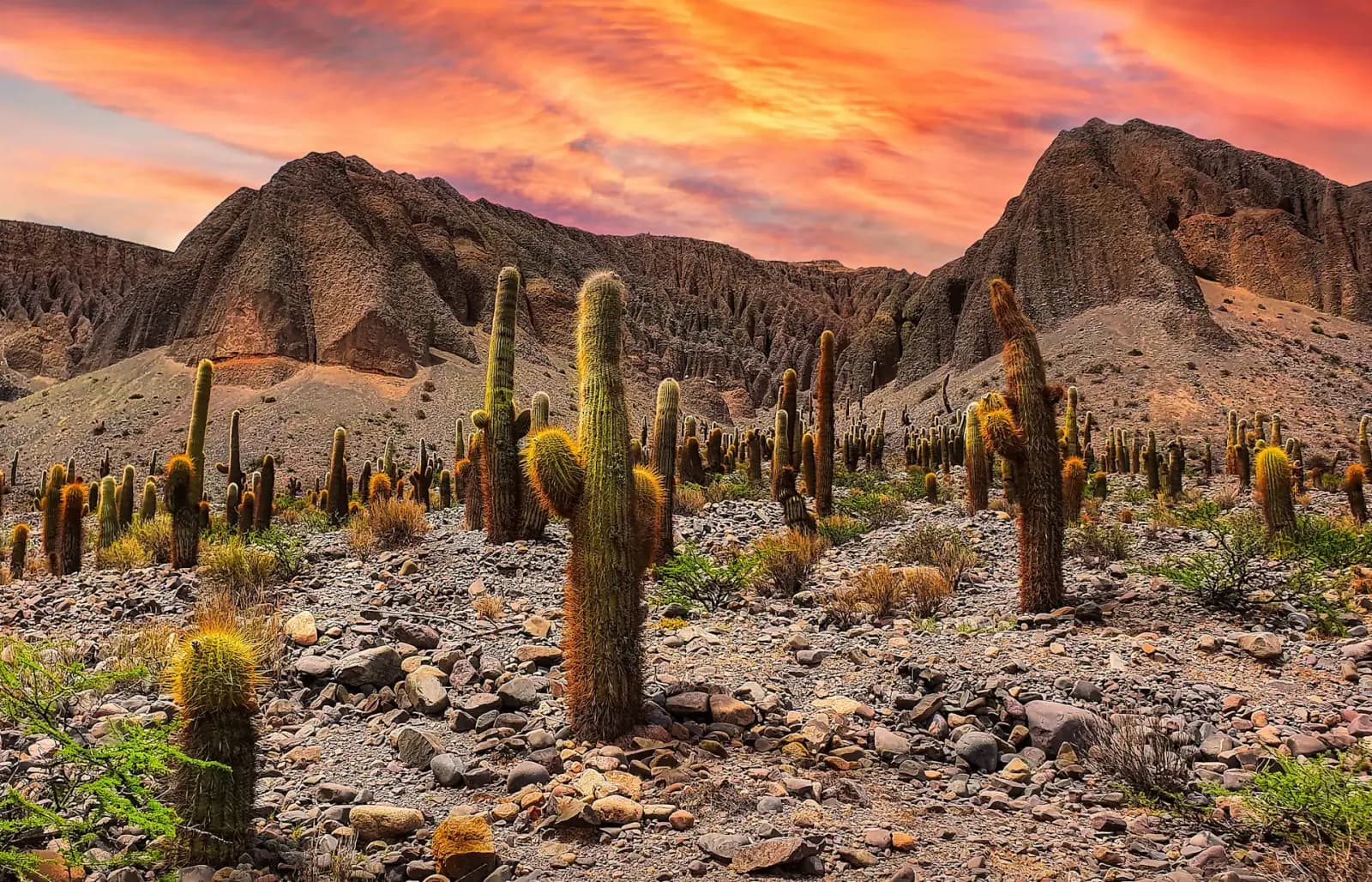
Salta rewards the road. The region's best days are spent on scenic drives and excursions through the valleys, winding past cactus-studded canyons, whitewashed colonial villages, and adobe churches that have stood for centuries. It moves at a different rhythm than Patagonia, warmer and slower, steeped in Andean tradition rather than glacial drama. Give it three or four days and you'll leave wishing you'd given it more.
To the south, the high-altitude town of Cafayate produces Torrontés, a crisp, aromatic white that's distinct from anything in Mendoza. And the blinding white expanse of the Salinas Grandes salt flats delivers some of the most surreal photography in the north of the country.
Ushuaia & Tierra del Fuego
At the very bottom of the continent, Ushuaia holds the title of the southernmost city in the world. It's ringed by the last peaks of the Andes and the historic waters of the Beagle Channel, and it's wrapped by Tierra del Fuego National Park, a rugged expanse of subpolar forest, peat bog, and glacial lakes.
- Best for
- Expedition travelers, Antarctica-bound cruisers, and collectors of far-flung places.
- When to go
- The austral summer, December to February, is the season for both trekking and cruising.
- Getting there
- A direct flight from Buenos Aires runs about 3 hours and 35 minutes, crossing thousands of miles of steppe before dropping into the mountains.
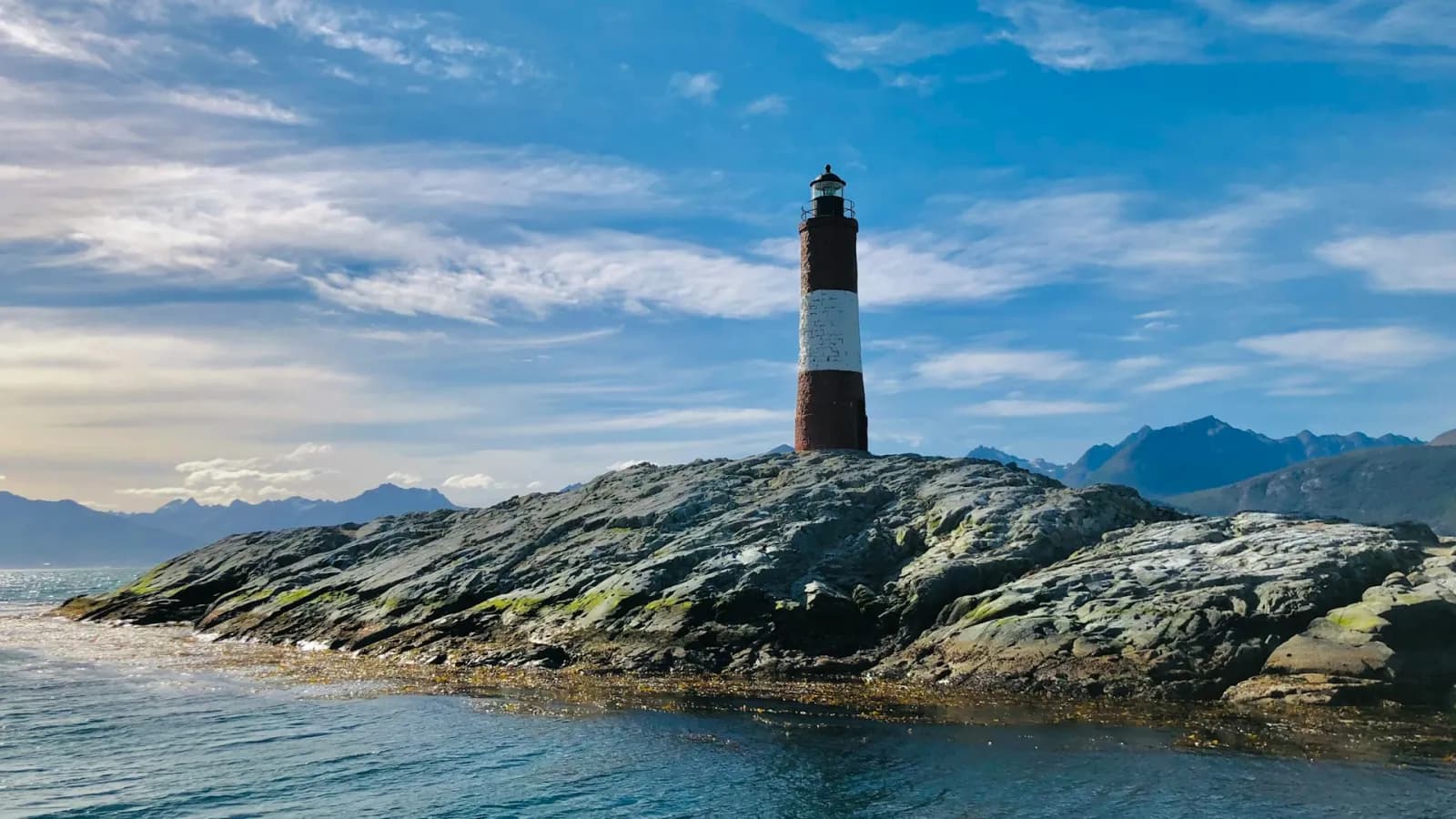
Why visit: This is the end-of-the-world experience, and it's more than a novelty. Ushuaia is the primary departure port for expedition cruises to the Antarctic Peninsula across the Drake Passage, and it's the launch point for a catamaran cruise along the Beagle Channel, gliding past penguin colonies, sea lion haul-outs, and the lonely Les Éclaireurs lighthouse.
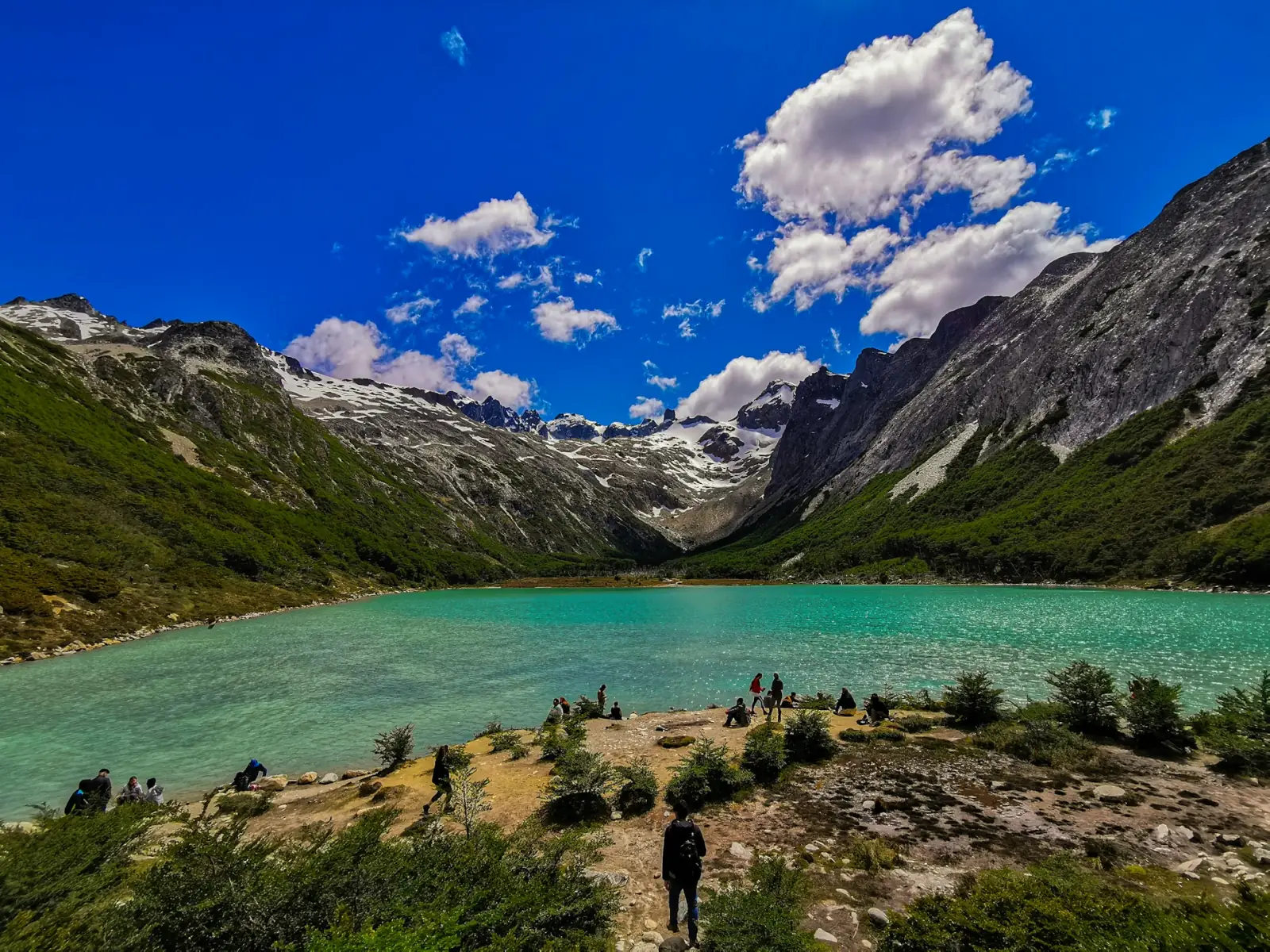
Onshore, Tierra del Fuego National Park is worth a full day. The Coastal Trail is an easy, scenic hike along the bay, and the park's subpolar forest and peat bogs feel truly otherworldly. Add a short excursion on the narrow-gauge End of the World Train for the history of the place, and you've filled a memorable couple of days at the bottom of the continent. It's a long way, and that distance is exactly what makes standing at the edge of the map feel earned.
Two More Worth Adding: Península Valdés & Córdoba
If your trip has room, two more places to visit in Argentina justify the detour. They're secondary to the core eight, but each fills a gap the others don't.
Península Valdés, jutting into the Atlantic from the province of Chubut, is one of the planet's premier marine wildlife sanctuaries and a UNESCO World Heritage Site since 1999. Its sheltered gulfs are breeding grounds for the Southern right whale, with a whale-watching season from June to December and a peak between August and October. You'll also find Magellanic penguins, elephant seals, and a famous population of orcas that beach themselves to hunt in the surf.
What makes Península Valdés special is that it delivers big-ticket wildlife without a single hard hike. You watch from boats and clifftop viewpoints, not from a trail, which makes it one of the best places in Argentina for travelers who want nature at a gentler pace or who are traveling with family. Pair it with a day or two in the port town of Puerto Madryn and you have a genuinely different chapter of Patagonia, one built around whales, not mountains.
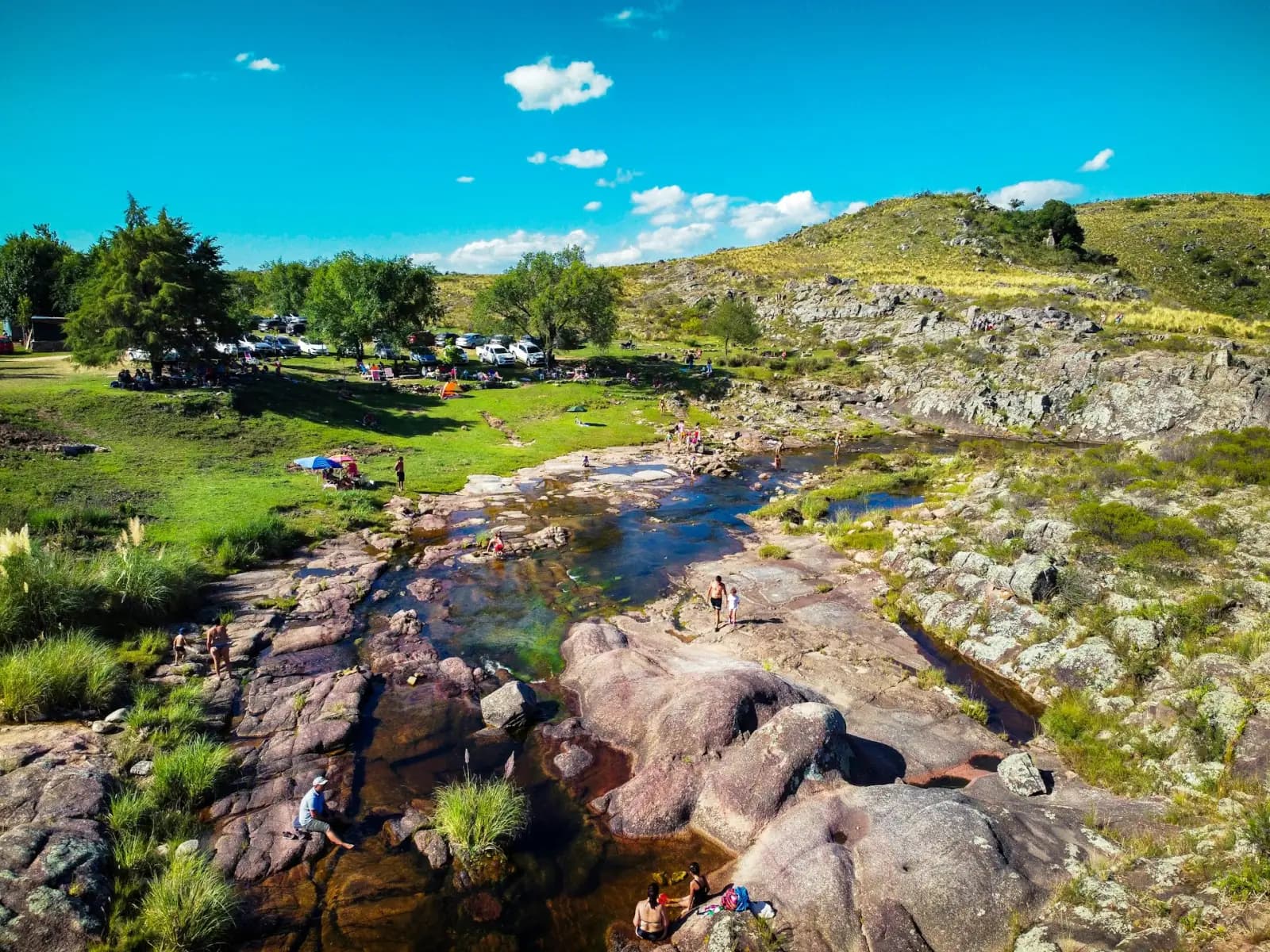
Córdoba, in the country's agricultural heartland, offers a deep dive into colonial history. Its Jesuit Block and surrounding estancias, recognized by UNESCO in 2000, preserve 17th-century religious and educational complexes that shaped the region long before modern Argentina took shape. The surrounding sierras also make for easy day trips and gentle day hikes, a quiet counterweight to the country's more famous extremes.
And if your Patagonia leg has flexibility, consider crossing into Chile. Patagonia is a region shared by Argentina and Chile, and the two sides sit close enough that many travelers weave them into one journey through the far south. From El Calafate, it's a manageable overland trip across the Argentina-Chile border to Torres del Paine National Park, the crown jewel of Chilean Patagonia.
Torres del Paine is built for hikers. Its famous granite towers hold up the multi-day W Trek, one of the great treks on the planet, though shorter routes let you sample the park without committing to the full circuit. If your trip runs longer or you're flying home from the Chilean side, routing through Santiago, Chile's capital, is straightforward and opens up its own wine country and coastline. The Chile extension is something we plan as an add-on to the Argentine side, so the crossing stays smooth rather than a trip of its own.
Argentina's Top Tourist Attractions at a Glance
Argentina's three most iconic attractions are Iguazú Falls, the Perito Moreno Glacier, and Buenos Aires. Iguazú and Perito Moreno trade the title of the country's number-one attraction depending on who you ask, both bucket-list natural wonders, while Buenos Aires opens nearly every itinerary as the cultural gateway. If you're short on time, these are the essential things to do in Argentina.
Iguazú Falls
the nation's premier natural wonder, immersive and impossibly loud, and the one most often crowned number one.
Perito Moreno Glacier
the accessible, dramatic crown jewel of Patagonia, with its thunderous calving events.
Buenos Aires
the cosmopolitan heart of the country and the natural gateway to everything else.
The rest of your list flows from your interests. Trekkers add El Chaltén, wine lovers add Mendoza, wildlife seekers add Península Valdés. But these three form the non-negotiable spine of a first trip, and no bucket list of Argentina is complete without them. For a first look at what to see in Argentina, start here.
Getting Around Argentina
Getting around the country means flying, full stop, at least between regions. The distances between Argentina's major cities and regions are simply too great for surface transport to make sense on a limited timeframe, so domestic aviation is the connective tissue of any real itinerary. Aerolineas Argentinas is the main carrier, with regional players like JetSmart filling in routes.
For shorter regional legs, the country runs an excellent long-distance bus network. High-end cama (sleeper) buses come with near-flat reclining seats and are a comfortable, scenic way to cover moderate distances, the El Calafate to El Chaltén run being the classic example. Renting a car makes sense for a specific corridor like the Route of the Seven Lakes, but it's rarely the backbone of a trip.
One thing to unlearn if you're used to Europe: Argentina has no useful passenger rail network connecting its tourist hubs. The national system faded through the last century, and what remains is slow. The train that's worth taking is the scenic kind, like the dramatic Tren a las Nubes in Salta, ridden for the views rather than to actually get somewhere.
A couple of practical habits smooth out domestic travel. Book internal flights well ahead, since popular routes to El Calafate and Ushuaia fill during the summer peak, and give yourself margin between a domestic connection and an international departure. Aeroparque (AEP) handles most domestic flights from the capital and sits close to the city center, while long-haul flights land at Ezeiza (EZE) further out, so know which airport your itinerary uses before the day arrives.
All of this is exactly why a curated trip earns its keep in a country this size. When the flights, the transfers, and the timing are handled for you, the vast distances stop being a burden and start being part of the adventure.
When to Visit Argentina — and Getting the Best Value
Is Argentina an expensive country to travel to? Not compared with North America or Western Europe. It offers strong value for US travelers, and timing matters more than anything else. The shoulder seasons, spring (September to November) and autumn (March to May), tend to deliver the best all-round experience: pleasant weather, thinner crowds, and easier availability at the best lodges.
Because Argentina sits in the Southern Hemisphere, its seasons are flipped from the United States, and the country is so long that no single window is right everywhere at once. The Patagonian south (El Calafate, El Chaltén, Bariloche, Ushuaia) peaks from December to March, when temperatures are warmest and the weather is most stable for trekking and cruising. The subtropical north and the arid northwest around Salta are most comfortable in the dry winter and spring, roughly May to October, when you dodge the deep-summer heat. Buenos Aires and Iguazú work year-round, though the capital's January and February can be hot.
September is a standout month for value and experience: Patagonia is waking up, the north is dry and clear, and Buenos Aires is at its most pleasant, all without the December-to-February peak-season crush. Season shapes an Argentina trip more than almost any other factor, so it's worth getting right before you lock in flights. For the full region-by-region breakdown, see our detailed guide on when to visit Argentina.
Is Argentina Safe and Welcoming for US Travelers?
Yes. Argentina is one of South America's safest and most welcoming destinations for US travelers, and for 2026 the US Department of State places it at Level 1, "Exercise Normal Precautions," the lowest advisory tier there is. You can read the official travel guidance for yourself.
A few things put first-time visitors at ease:
- Level 1 advisory — the lowest US State Department risk tier for 2026.
- English is widely spoken across hotels and tourist services, so you don't need Spanish to have a wonderful first trip.
- Warm, attentive hospitality in the main destinations, and Argentines who are sincerely glad to have visitors.
In the cities you'll use the same street-smarts as in any major world capital. The moment you reach Patagonia, the Lake District, or the northwest, you're in relaxed, remote outdoor country. A curated, guided trip removes the last of the guesswork by handling the logistics on the ground.
Turning an Argentina Trip Into an Auction Package
Here's where a dream trip becomes something more. The same destinations you've just read about, Buenos Aires, Iguazú, Mendoza, Patagonia and Bariloche, and the fly-fishing rivers, are the experiences Horizon Travel Auctions curates into travel packages for nonprofit fundraising. A place on a bucket list becomes an item that raises real money for a cause.
The model is built to be entirely risk-free for the organization. There's no upfront cost, and the nonprofit keeps 100% of every dollar bid above the base amount. We handle the curation, the marketing kit, and the fulfillment for whoever wins — hotel bookings, reservations, transfers, and on-trip support on the ground in Argentina, so the winner just shows up. Transparent inclusions, clear validity windows, no vague fine print.
Each of the destinations in this guide maps to a curated experience, so the item you bring to an auction matches the room you're raising money in. For a nonprofit, that's an aspirational prize that drives competitive bidding and is easy to explain to a board. For the winning donor, it's a boutique, carefully planned trip with responsive support from the first inquiry to the final transfer. Both sides get the quiet-luxury version of the same journey.
If a curated experience belongs at your next event, explore our curated Argentina experiences and see how the packages come together. Nonprofits ready to raise more can start raising more today.
Choosing Your Places to Visit in Argentina
If you take one thing from all of this, let it be permission to leave things out. Argentina isn't a country you finish. The traveler who spends four unhurried days watching ice calve off Perito Moreno goes home with more than the one who chased eight regions in twelve days and remembers mostly the airports. Choosing well is the whole art of it.
So here's the shortcut we'd give a friend planning a first trip: Buenos Aires to land softly into the culture, one natural showstopper (Iguazú or the Perito Moreno Glacier), and a third region that matches whatever pulled you toward Argentina in the first place. Do that, travel in the season that suits it, and the country stops being an overwhelming map and starts being the trip you'll be telling stories about for years.
When you're ready to plan your trip, see the full range of Argentina experiences and send an inquiry. And if you're fundraising for a cause, a package like this could be the item that raises more than you expect.